
What Your Car’s Shifting Symptoms May Be Telling You
Poor engine performance, dragging brakes or another drivetrain fault can cause the same symptom, so that symptom alone cannot identify the cause.
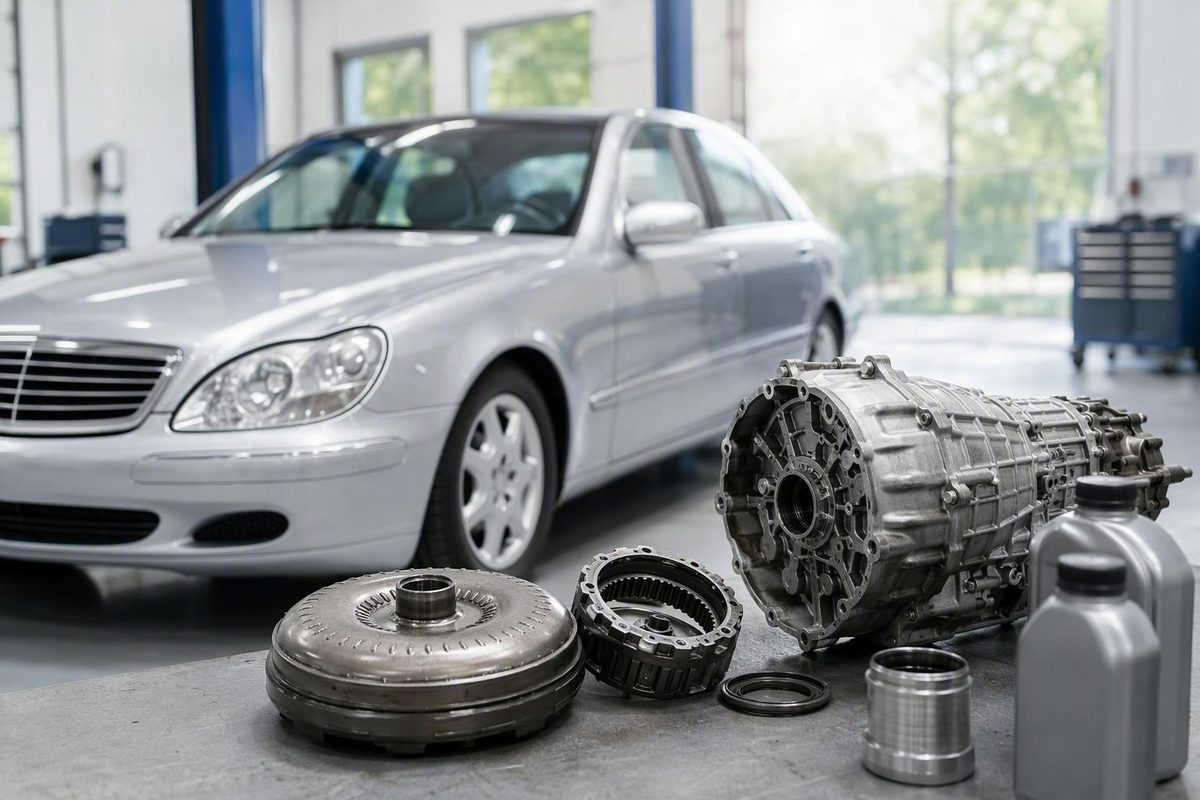
Automatic transmission problems rarely arrive with a neat, component-level diagnosis. Rising engine speed, delayed response after selecting Drive, a hard shift, a warning light, or a puddle under the car is a clue—not proof that the transmission has failed.
The same symptom can result from incorrect fluid level, lost hydraulic pressure, worn internal parts, a solenoid or sensor fault, damaged wiring, poor engine performance, dragging brakes, or another drivetrain component. The sensible response is to describe exactly what the vehicle is doing, assess whether continued driving is prudent, and use vehicle-specific information and targeted testing to find the cause.
Start Here: Is It Safe to Keep Driving?
No symptom-based rule can guarantee that a vehicle is safe to drive. Dashboard instructions and the owner’s manual take priority, and road, traffic, and weather conditions matter. As a conservative general framework, place the problem into one of three urgency levels.
1. Monitor and document
Monitoring is reasonable when there is no definite or reproducible shift problem, warning message, leak, unusual odor, noise, overheating indication, or loss of performance. An example is an uncertain one-time sensation that may have been a normal downshift or a change in road surface.
Record when it happened, whether the vehicle was cold or warm, road speed, engine RPM, selected gear, load, and any recent service. If the behavior returns or becomes identifiable as a new shift-quality problem, arrange a prompt diagnosis.
2. Schedule prompt diagnosis
A definite new shift-quality change belongs here even if it has happened only once and the vehicle still moves normally. Examples include:
- A firm or abrupt shift
- A brief delay after selecting Drive or Reverse
- An RPM flare during a shift
- New shuddering or vibration
- A warning light without smoke, overheating, or loss of propulsion
- A suspected small leak that is not visibly escaping rapidly
Do not conclude from one symptom that the transmission is destroyed. Equally, do not treat active slipping or delayed engagement as routine maintenance. Low fluid and slipping can interfere with cooling, lubrication, or power transfer and may contribute to additional heat and wear.
Minimize unnecessary driving and heavy load while arranging an inspection. This category is not a declaration that driving is safe; if the symptom worsens or acceleration becomes unpredictable, move to the stop-driving category.
3. Stop driving and arrange professional assessment or towing
Pull over as safely as traffic and road conditions allow if the vehicle develops:
- Severe or repeated slipping
- No forward movement in Drive
- No movement in Reverse
- Rapid fluid loss
- Smoke
- A strong burning odor
- An overheating warning
- Unpredictable loss of acceleration that makes merging or crossing traffic hazardous
Slipping can leave a vehicle without the expected acceleration, while smoke or a burning smell may accompany overheating or a fluid leak. Those warning signs support a conservative decision to stop rather than continue testing the vehicle on the road, consistent with Valvoline’s overview of transmission warning signs.
Towing cannot guarantee that no damage has already occurred. It simply avoids deliberately adding more driving time under a potentially unsafe or damaging condition.
Immediate-action checklist
- Ease off the accelerator and reduce load. Do not provoke the symptom with repeated hard acceleration.
- Move out of traffic and stop in a safe location.
- Note warning lights and record the dashboard message exactly.
- From a safe standing position, look for a fresh puddle or visible smoke.
- If there is smoke or an overheating warning, shut the vehicle down unless the owner’s manual directs otherwise.
- Consult the owner’s manual for vehicle-specific warnings and instructions.
- Arrange roadside assistance or towing if propulsion is unreliable or fluid is escaping rapidly.
Do not work beneath a vehicle that is not properly supported with equipment and procedures suitable for the task. Do not improvise a fill with unidentified fluid when the required specification or level-setting process is unknown. Some transmissions lack an accessible dipstick and require lifting equipment, temperature monitoring, a scan tool, or specialized filling tools; Consumer Reports advises following the automaker’s fluid type and service method rather than applying a universal procedure (vehicle-specific transmission maintenance guidance).
Recognize the Symptom Before Guessing at the Cause
Accurate language helps a technician reproduce the condition and prevents several different behaviors from being grouped together as “shifting badly.”
Slipping or RPM flare
Slipping generally means engine RPM rises without a proportional increase in road speed. The tachometer may jump during steady acceleration while the vehicle gains little speed.
That differs from a normal downshift. During an ordinary downshift, the transmission deliberately selects a lower gear, RPM rises, and acceleration normally increases with it. With a suspected flare, engine speed rises but the expected transfer of power is missing or delayed.
Delayed engagement
Delayed engagement is a noticeable pause after selecting Drive or Reverse before the vehicle begins to move. Record approximately how long the pause lasts, whether engagement ends with a jolt, and whether the condition occurs cold, warm, or only in one direction.
Do not repeatedly alternate between Drive and Reverse to investigate it. A carefully recorded observation is more useful than repeatedly loading a system that may already have a fault.
Rough or harsh shifting
A harsh shift is a jolt, bang, or unusually abrupt transition during a gear change. It is different from waiting for Drive or Reverse to engage, although the two symptoms can occur together.
“Harsh 2–3 shift when warm at light throttle” is more diagnostically useful than “the transmission jerks.”
Erratic shifting
Erratic shifting includes unexpected gear changes, repeated hunting between gears, unusually early or late shifts, or failure to remain in the expected gear. Hydraulic, mechanical, electrical, programming, and engine-related conditions can all influence shift timing. The observation alone does not identify the cause.
Shudder
Shudder is a repeated vibration or rapid oscillation during engagement, acceleration, a gear change, or torque-converter operation. Note whether it resembles driving over a rumble strip, changes with throttle position, or occurs within a narrow speed range.
A shudder is not automatically an internal transmission fault.
Loss of drive
Loss of drive means the engine runs but the vehicle will not move forward, backward, or both. It requires urgent assessment, but it does not prove that every internal part has failed. Fluid loss, loss of hydraulic pressure, an electrical or control fault, and internal damage are all possible categories.
Limp or default operation
A control system that detects a serious fault may restrict available gears or vehicle performance. The vehicle may start in one gear, shift very little, or accelerate poorly. That behavior confirms the need for diagnosis; it does not identify the failed component.
Other recurring warning signs include shaking, poor acceleration, whining, humming, grinding, clunking, a puddle, burning odor, overheating, and Check Engine or transmission warnings. AAMCO’s general symptom guidance likewise presents leaks, power loss, delayed shifts, noises, warnings, and slipping as conditions with overlapping possible causes rather than automatic proof of internal failure (common transmission symptoms and possible causes).
The pattern matters as much as the symptom. Record whether the behavior is:
- Cold-only or hot-only
- Constant or intermittent
- Limited to Drive, Reverse, or one particular shift
- Present under light throttle, hard acceleration, towing, or climbing
- Associated with a particular road speed or engine RPM
- New after fluid service, battery work, collision repair, or another repair
- Temporarily cleared by restarting the vehicle
These details do not make the diagnosis by themselves.
Symptom-to-Cause Guide: Several Faults Can Feel the Same
The table below is deliberately non-ranked. It identifies broad categories a qualified technician may investigate; it is not a parts-replacement list or a vehicle-specific test procedure.
| Observable symptom | Possible fluid or hydraulic causes | Possible mechanical causes | Possible electrical or control causes | Non-transmission alternatives | Urgency | Examples of professional checks |
|---|---|---|---|---|---|---|
| RPM rises without matching acceleration; flare during a shift | Low, incorrect, degraded, aerated, or contaminated fluid; insufficient hydraulic pressure | Worn clutches or bands; torque-converter or internal wear | Solenoid operation; incorrect gear command; ratio-control or speed-signal problem | Axle or other driveline failure | Prompt diagnosis; stop if severe, repeated, or accompanied by lost propulsion | Correct fluid-level procedure; code scan; comparison of commanded gear and shaft speeds; hydraulic testing when supported by service information |
| Delay after selecting Drive or Reverse | Incorrect fluid level or type; leak; delayed pressure buildup | Internal wear; pump, clutch, or valve-body problem | Solenoid, range-signal, wiring, module, or communication fault | Engine idle problem; mount movement or driveline slack exaggerating engagement | Prompt diagnosis; tow if engagement is unreliable | Leak inspection; fluid verification; codes and live data; engagement observation; targeted hydraulic or electrical tests |
| No movement forward, backward, or both | Major fluid loss or severe pressure loss | Internal transmission, converter, or driveline failure | Range-input, power, ground, solenoid, module, or communication fault | Axle, driveshaft, transfer-case, or differential failure | Stop driving and arrange towing | Fluid and leak inspection; range-data check; scan; driveline inspection; targeted pressure or internal inspection if justified |
| Harsh or banging shift | Wrong, degraded, contaminated, overfilled, or underfilled fluid; pressure-control problem | Valve-body or internal wear; mount movement | Pressure-control solenoid; speed or load input; wiring; adaptation, calibration, or communication issue | Engine torque irregularity; damaged mount; driveline lash | Prompt diagnosis | Full-module scan; relevant live data; controlled road test; electrical or hydraulic testing |
| Erratic or poorly timed shifts | Incorrect fluid or unstable hydraulic operation | Valve-body or internal wear | Sensor input, solenoid, wiring, communication, programming, or adaptation problem | Engine-load, throttle, cooling-system, or reduced-power fault | Prompt diagnosis | Code retrieval from relevant modules; live-data review; controlled road test; software and service-information check |
| Shudder during engagement, shifting, or steady-speed operation | Incorrect or degraded fluid; unstable converter-clutch operation | Torque converter, clutch, bearing, mount, or internal wear | Converter-clutch control, solenoid, speed-data, or engine-torque command issue | Misfire; axle, tire, wheel, or mount problem | Prompt diagnosis; stop if control or propulsion becomes unreliable | Misfire and converter-slip data; road-test isolation; inspection of mounts, axles, tires, and fluid specification |
| Whining, humming, grinding, or clunking | Low fluid, aeration, or restricted hydraulic flow | Pump, bearings, gears, torque converter, differential, or other hard-part wear | A control fault may create an abnormal operating state, but noise alone rarely isolates it | Wheel bearing, axle, driveshaft, transfer case, accessory drive, exhaust contact, or mount | Prompt diagnosis; stop for loud grinding, loss of drive, or rapidly worsening noise | Noise localization; fluid and debris inspection; chassis and driveline inspection; targeted transmission testing |
| Weak acceleration | Pressure loss or converter-related hydraulic trouble | Worn clutch, torque-converter fault, or internal drag | Reduced-power strategy; incorrect load or speed input; communication fault | Misfire, fuel or air problem, restricted exhaust, or dragging brakes | Prompt diagnosis; stop if acceleration is unsafe | Engine and transmission scan; engine-performance and brake checks; converter and shaft-speed data |
| Leak or puddle | Pan, gasket, seal, cooler line, fitting, case, or converter-area leak | Damaged housing or connection | Usually not an electrical cause | Engine oil, coolant, power-steering fluid, water, fuel, or another lubricant | Prompt diagnosis; tow for rapid loss or smoke | Clean visual inspection; source tracing; correct fluid-level check |
| Burning odor, smoke, or overheating warning | Low, degraded, leaking, or aerated fluid; cooling problem | Excess internal friction; pump, clutch, or converter trouble | Temperature-signal or control fault | Engine oil on exhaust; coolant fault; electrical problem; dragging brakes | Stop safely for smoke or an overheating warning and follow vehicle instructions | Leak and heat-source inspection; temperature data; fluid, cooling, electrical, brake, and engine checks |
| Check Engine or transmission warning | Detected overtemperature, pressure-control issue, or slip | Internal failure may create a monitored ratio error | Speed sensor, solenoid circuit, wiring, communication, shift-timing, or programming fault | Engine or network fault unrelated to internal transmission damage | Prompt scan; urgency rises with drivability symptoms | Full-system scan; freeze-frame and live data; circuit tests; software and service-information review |
A warning may appear when a control module detects unexpected temperature, shift timing, shaft-speed information, solenoid-circuit behavior, slipping, or a ratio mismatch. Modern diagnosis therefore has to consider mechanical operation, hydraulic control, sensor inputs, engine data, and communication between modules, as described in this automotive trade overview of electronic transmission diagnosis.
If “solenoid” appears beside a symptom, it means solenoid operation may require testing. It does not mean that buying a solenoid is the next logical step.
Transmission Fluid Problems: Level, Type, Condition, and Leaks
Automatic-transmission fluid performs several functions. Depending on transmission design, it supports hydraulic pressure, lubricates moving parts, carries heat, and contributes to controlled clutch and gear operation. Level, type, condition, and flow can therefore affect both shifting and temperature.
Underfilling
The next question is why the level is low. Adding fluid without locating the leak leaves the original problem active.
Degraded or contaminated fluid
Fluid condition can contribute to a diagnosis when considered alongside odor, debris, codes, pressure readings, and symptoms.
Appearance alone cannot reveal the transmission’s complete internal condition. Dark fluid may justify investigation, but it does not by itself prove a particular failure.
Incorrect fluid
Automatic-transmission fluids are not interchangeable merely because they look similar or are marketed for multiple vehicles.
Use the exact specification applicable to the vehicle and transmission. Do not rely solely on model year, fluid color, or broad “universal” wording on a bottle.
Overfilling
Too much fluid is a separate fault, not harmless insurance against a leak. Valvoline identifies foaming and overheating as possible consequences of overfilling in its transmission-fluid guidance.
Leaks
Possible leak areas include:
- Transmission pan or pan gasket
- Case and shaft seals
- Electrical connector seals
- Cooler lines and fittings
- Torque-converter or pump area
- Damaged housings or plugs
Color is also inconclusive. Not every automatic-transmission fluid is red, and fluid appearance varies with formulation, age, contamination, lighting, and the surface beneath the vehicle.
A red puddle is not automatic proof of an ATF leak. Brown or nearly clear fluid is not proof that it came from another system. The source must be inspected.
Can you check it yourself?
That depends on the vehicle. Even a conventional dipstick does not make every checking process identical. Manufacturer instructions may specify:
- A level surface
- Engine running or stopped
- A particular selector sequence
- A defined fluid-temperature range
- A cold or hot reference
- A vehicle raised level
- A scan tool to read fluid temperature
- A fill or overflow plug
- A specialized pump, adapter, or measuring dipstick
If you cannot verify the required fluid specification, engine state, temperature range, and level-setting process, do not improvise. An inaccurate top-off or incompatible fluid can create an additional problem. Even when the correct fluid restores the level, the cause of fluid loss still requires attention.
How a Proper Diagnosis Moves Beyond a Code Scan
A useful diagnosis moves from observation to verification rather than from symptom to guessed component.
1. Document the symptom
The technician needs to know what happens and under which conditions. “RPM flares after 20 minutes during the 2–3 shift at moderate throttle” is a testable report. “The transmission is bad” is not.
2. Inspect for leaks and verify the fluid correctly
The vehicle is checked for external leakage, damage, correct fluid specification, level, and condition using the required procedure. If the level is wrong, the cause and possible consequences still need investigation.
3. Retrieve codes from all relevant modules
Available functions vary by vehicle and tool.
4. Review live data
The technician compares what the controller commanded with what the transmission and vehicle actually did. Relevant data may include:
- Engine speed
- Turbine or input-shaft speed
- Output-shaft or vehicle speed
- Commanded and calculated gear
- Torque-converter clutch command and slip
- Transmission-fluid temperature
- Throttle position and calculated engine load
- Selector or range status
- Solenoid commands
- Brake-switch state
- Module voltage and communication status
Comparing engine, input-shaft, and output-shaft speeds can help determine whether a commanded ratio was achieved, whether a clutch appears to be slipping, or whether a speed signal is implausible.
5. Reproduce the condition during a controlled road test
Testing should end if propulsion becomes unreliable or continued operation would be unsafe.
6. Perform targeted tests
The findings—not the symptom alone—determine the next test. Depending on the vehicle and evidence, that may include electrical circuit checks, hydraulic pressure testing, fluid or debris inspection, mechanical inspection, or verification of software, programming, and adaptation requirements.
Professional equipment may include a capable scan tool, digital multimeter, labscope, pressure gauges, and transmission-specific service information.
Consider code P0732. It records that the control module detected a second-gear ratio outside its expected range; it does not establish that a particular clutch, speed sensor, or solenoid has failed. Technicians may need to compare commanded gear with input- and output-speed data and then investigate hydraulic, mechanical, electrical, or communication causes. This bounded interpretation is consistent with the P0732 diagnostic example from Mister Transmission.
Engine behavior matters because transmission controls use engine load, throttle, temperature, and torque information to schedule and manage shifts. Some vehicles also require programming, initialization, or adaptation procedures after particular repairs.
Symptom-log template
Copy or print the following for each event:
- Date and time:
- Odometer:
- Ambient temperature:
- Vehicle cold, warming, or fully hot:
- Selected gear:
- Approximate road speed:
- Engine RPM before and during the symptom:
- Light, medium, or heavy throttle:
- Level road, uphill, or downhill:
- Towing, cargo, or passenger load:
- Exact symptom:
- Warning lights or messages:
- Noise and apparent location:
- Odor or visible smoke:
- Puddle or visible leak:
- Recent repairs or fluid service:
- Did restarting clear the problem?
- Is it intermittent or repeatable?
Before approving a rebuild or replacement, ask for the retrieved codes, fluid and leak findings, road-test observations, and supporting electrical, hydraulic, or mechanical tests. A code scan alone is not sufficient evidence for the most extensive repair.
Fluid Service, Targeted Repair, Rebuild, or Replacement?
The first distinction is between preventive service and corrective repair.
Preventive service is performed according to the vehicle’s maintenance requirements before a confirmed fault develops. Depending on the design, it may include fluid replacement, a serviceable filter, a pan gasket, inspection, and the correct level-setting procedure.
Corrective repair addresses an existing symptom or failed component. It can range from repairing a wire or leak to rebuilding the transmission.
Correcting a verified low level, wrong fluid specification, contamination problem, or leak may improve operation. Fresh fluid cannot replace missing clutch material, repair a damaged gear, straighten a shaft, or reverse other physical damage.
If symptoms appeared after fluid service, timing alone does not prove that fresh fluid caused the underlying wear. First verify:
- Exact fluid specification and approval
- Fill quantity and final level
- Required temperature and engine state
- Filter and seal installation
- Connector and wiring condition
- Whether the prescribed procedure was followed
- Whether adaptation, initialization, or programming was required
- Whether the symptom existed intermittently before service
A drain-and-fill generally removes only the fluid that drains from the pan or drain plug, leaving fluid elsewhere in the unit. A flush or exchange replaces more of the system’s fluid. Neither label guarantees filter replacement or pan inspection, so ask what the quoted service includes.
The correct choice depends on manufacturer instructions, service history, transmission design, current condition, and active symptoms. A normally operating vehicle with documented maintenance presents a different decision from one that is slipping, contains debris, or has an unknown history. There is no defensible universal mileage rule, and flushing should not be described as always safe or always harmful.
The repair spectrum includes:
- Correcting a verified fluid level
- Replacing incorrect fluid by an approved procedure
- Repairing a pan, seal, cooler-line, or connector leak
- Repairing wiring, power, ground, or communication faults
- Replacing a failed sensor or solenoid after testing
- Performing valve-body repair
- Correcting programming, software, or adaptation issues
- Repairing or replacing the torque converter
- Rebuilding damaged internal assemblies
- Replacing the complete transmission
Solenoids, valve bodies, speed sensors, and some other contained faults may be repairable without a full rebuild. Significant clutch-pack or hard-part damage may support rebuilding or replacement, as outlined in Hahn Automotive’s comparison of contained repairs with rebuild and replacement.
Before approving major work, review the owner’s manual, warranty terms, and current manufacturer information for the exact vehicle. Check recall and extended-coverage status by VIN; Consumer Reports also recommends using recall-search tools when transmission repair or coverage may apply. A service bulletin, common symptom, or recall inquiry does not by itself mean the manufacturer will pay for a repair.
Mercedes 722.6 Case Study: Useful Specifics That Do Not Apply Universally
This is a non-procedural example involving Mercedes-Benz W220 vehicles reportedly equipped with the 722.6 five-speed automatic. It illustrates why model-specific claims must be separated from general troubleshooting. It is not a service specification, maintenance schedule, or substitute for current Mercedes-Benz documentation identified by VIN and transmission variant.
W220 Repair associates an unmaintained 722.6 with harsh 2–3 shifts, cold-start flare, and limp-home operation. These are the publisher’s observations—not verified diagnoses, prevalence findings, or proof that fluid neglect caused any particular symptom. A vehicle displaying those behaviors still requires code retrieval, correct fluid verification, live-data analysis, and targeted testing before anyone blames the fluid, valve body, conductor plate, or internal hardware.
The publisher recommends fluid-and-filter service approximately every 40,000–60,000 miles, with additional consideration for towing or heavy city use. The available evidence does not establish that range as an official Mercedes-Benz schedule, so owners should not use it as an authorization to service a vehicle without checking current manufacturer information for the exact VIN (W220 Repair’s 722.6 discussion).
W220 Repair also associates MB 236.10 or MB 236.12 with the 722.6 and MB 236.14 or MB 236.15 with later 722.9 units, stating that the specification groups are not interchangeable. These are publisher-reported fluid associations, not independently verified Mercedes specifications within the available evidence. Confirm the installed transmission and current Mercedes-Benz approval documentation before selecting fluid.
The same article describes a 722.6 service as including:
- Filter and pan-gasket replacement
- Inspection of the electrical connector sleeve for leakage
- Refilling through the designated tube
- Temperature-based level setting with a measuring dipstick
It also reports a check temperature of roughly 45°C and says a drain-and-fill exchanges roughly 40 percent because fluid remains elsewhere in the transmission. Those figures must not be treated as instructions: they require verification against current Mercedes-Benz service information for the exact vehicle, transmission version, fluid, and procedure.
Claims that the original lifetime-fill approach was merely marketing, that universal fluid necessarily causes shudder, or that pressure flushing necessarily dislodges damaging sediment are not established by the supplied evidence and should not be treated as facts.
The useful takeaway is narrower. A W220 owner should confirm that the vehicle actually has a 722.6, verify the approved fluid and level-setting procedure through current Mercedes documentation, inspect relevant service areas when appropriate, and diagnose harsh shifts or limp operation rather than assuming neglected fluid explains everything.
What to Record and Ask Before Authorizing Work
A clear intake sheet helps the shop reproduce the problem and helps you assess whether the proposed repair follows from the findings.
Printable vehicle and symptom checklist
- [ ] VIN
- [ ] Year, make, model, and engine
- [ ] Current mileage
- [ ] Transmission type or identification, if known
- [ ] Maintenance and repair history
- [ ] Date and mileage of last transmission service
- [ ] Drain-and-fill, exchange, filter service, or unknown procedure
- [ ] Exact fluid brand, product, and specification used
- [ ] Invoices from recent work
- [ ] Exact dashboard warnings or messages
- [ ] Stored, pending, permanent, and manufacturer-specific codes supplied by the shop
- [ ] Whether codes were previously cleared
- [ ] Cold-only, hot-only, or temperature-independent behavior
- [ ] Selected gear when the symptom occurs
- [ ] Vehicle speed and engine RPM
- [ ] Road grade and throttle position
- [ ] Towing, payload, or heavy passenger load
- [ ] Noise, vibration, odor, smoke, or overheating
- [ ] Puddle location and estimated rate of fluid loss
- [ ] Whether the fault clears after restarting
- [ ] Whether the problem is intermittent or repeatable
Photographs of warning messages and passenger-recorded video of the instrument panel may help. The driver should not operate a phone or recreate severe slipping, loss of drive, or overheating merely to capture the event.
Questions to ask the technician
- Was the reported symptom reproduced?
- Under what temperature, speed, load, and gear conditions?
- Was the fluid specification checked against current information for this vehicle?
- Was the level verified using the correct temperature, engine state, and procedure?
- Where is any leak actually originating?
- What codes were found in the engine, transmission, brake, and related modules?
- Which freeze-frame and live-data results were relevant?
- Did commanded gear match calculated ratio behavior?
- Were input- and output-speed signals plausible?
- Were engine performance, dragging brakes, mounts, axles, wiring, grounds, and network communication considered?
- Were software updates, programming requirements, and adaptations checked?
- What test confirms the component named in the estimate?
If a rebuild or replacement is recommended, ask which evidence supports it:
- Hydraulic pressure findings
- Measured speed-ratio errors
- Electrical circuit results
- Fluid debris or pan observations
- Verified clutch or converter slip
- Internal inspection findings
- Evidence that makes a contained valve-body, solenoid, sensor, wiring, or control repair implausible
Also ask whether the replacement is new, remanufactured, rebuilt, or used; which ancillary parts are included; what programming is required; and what warranty applies.
The decision path is straightforward:
- Severe slipping, loss of propulsion, smoke, overheating, strong burning odor, or rapid fluid loss: stop safely, follow the vehicle’s warnings, and arrange professional assessment or towing.
- Active but stable slipping, delay, harsh shifting, shudder, noise, leak, or warning light: reduce unnecessary driving, document the pattern, and schedule prompt diagnosis.
- No active symptom and scheduled maintenance is due: follow the vehicle-specific fluid, filter, interval, and level-setting procedure.
Frequently Asked Questions
Can I keep driving if my automatic transmission is slipping?
Do not continue if slipping is severe, repeated, or making acceleration unpredictable. Pull over safely and arrange assessment or towing if engine RPM rises sharply without useful acceleration, the vehicle loses propulsion, or slipping occurs with smoke, an overheating warning, rapid fluid loss, or a strong burning odor. These are conservative general precautions; the owner’s manual and dashboard instructions remain controlling.
For a mild isolated event without a leak, warning, odor, overheating, or loss of movement, avoid heavy load and arrange prompt diagnosis rather than declaring the transmission failed. The symptom alone does not reveal whether the cause is fluid-related, hydraulic, electrical, or mechanical.
Will changing transmission fluid fix slipping or delayed engagement?
It may improve operation when diagnosis confirms an incorrect level, wrong specification, degraded or contaminated fluid, or a leak-related fluid problem. The service must use the correct fluid and follow the vehicle’s filling and level-setting procedure.
A fluid change cannot replace worn clutch material or repair damaged gears, shafts, seals, or other failed components. If symptoms appeared after service, verify fluid specification, level, procedure, workmanship, and any required adaptations before concluding that fresh fluid caused the failure.
What does an automatic-transmission trouble code actually prove?
A code records what a control module detected according to its monitoring logic, such as a circuit condition, implausible signal, communication problem, or operating value outside the expected range.
For example, P0732 records an unexpected second-gear ratio. Determining why may require input- and output-speed data, commanded-gear information, electrical checks, hydraulic tests, and a controlled road test. Replacing a sensor, solenoid, or transmission solely because its name appears in a generic code description skips that diagnosis.
How do I check transmission fluid if my vehicle has no dipstick?
Start with current manufacturer service information for the exact vehicle and transmission. A dipstick-free unit may require the vehicle to be level on appropriate lifting equipment, the engine to be in a specified state, the fluid to be within a defined temperature range, and fluid to be added through a designated plug with specialized tools.
Because an incorrect temperature or procedure can produce the wrong level, the task may not be suitable for do-it-yourself service. Do not remove an underbody plug without the correct support, equipment, and procedure, and do not add unidentified fluid as a precaution.
For the W220 722.6 example, W220 Repair describes a temperature-based check using a measuring dipstick. Its approximate temperature and method are unverified publisher guidance, not a substitute for current Mercedes-Benz service information.
Should I choose a transmission flush or a drain-and-fill?
Choose according to the manufacturer’s instructions, transmission design, maintenance history, fluid condition, and whether active symptoms are present.
A drain-and-fill generally replaces part of the fluid. An exchange or flush replaces more, but equipment and shop procedures vary. Neither method is automatically better, and neither repairs mechanical damage. If the transmission is slipping, failing to engage, making serious noises, or showing debris, obtain a diagnosis before treating the condition as routine fluid maintenance.
Symptoms and codes are clues, not verdicts. Stop and arrange assessment or towing for severe slipping, loss of propulsion, smoke, overheating, a strong burning odor, or rapid fluid loss. Otherwise, document the behavior and seek diagnosis promptly. Verify the exact fluid specification and service process through current manufacturer information, and require supporting test findings before approving major work. For W220 owners, the 722.6 discussion is a model-specific starting point—not a universal rule or a substitute for Mercedes-Benz documentation.